
How to Check for a Warrant in Chickasaw County
The Sheriff's website for Chickasaw County posts no public active-warrant roster, so the practical route runs through the courts. Begin at Iowa Courts Online, the statewide public index of case dockets. A search there can surface a Chickasaw County case and the events tied to it. From there, the Clerk of Court explains which parts of the court record you can see, and the Sheriff confirms enforcement status for anyone checking their own name. Before you search, gather the details that narrow a name: full name, any spellings or aliases, a case or citation number, and the date of the event. The public name search needs only the first two letters of a last name and accepts wildcards. A date of birth helps an office tell similar names apart, though it is not the main public search field. If a warrant turns up, talk to a lawyer before you act on it.
- Search Iowa Courts Online for a public Chickasaw County case or docket event.
- Match the county, case type, case ID, and name rather than relying on a name alone.
- Call the Clerk of Court at 641-394-2106 to ask what the public docket shows.
- Call the Sheriff at 641-394-3121 to confirm the current enforcement status.
- If a warrant is confirmed, discuss appearance, surrender, bond, or court relief with an attorney.
Chickasaw County Warrant Search Fields
One caution shapes every Chickasaw County warrant search. Iowa Courts Online is a case index, not a live warrant list. A case may hold a warrant event, yet the public display can lag behind, skip a confidential matter, or say nothing about agency status after service or recall. Treat the index as a way to identify the case. Then carry that identifier straight to the Clerk and the Sheriff.
| Field | How to use it | Limit |
|---|---|---|
| Last name | Enter at least two letters; use a wildcard when needed | May return several people |
| First name | Narrow a broad last-name result | Name spelling can vary |
| County | Select Chickasaw | Another county may hold another case |
| Case ID | Open the exact known case | Must be entered correctly |
| Case type | Distinguish criminal, traffic, or infraction records | Does not state live agency status |
For search mechanics, the official Iowa Courts Online help walks through name and wildcard methods. A courthouse terminal or a paid subscription can unlock more options. A basic public docket search in Chickasaw County needs neither.
Types of Warrants in Chickasaw County
Warrants in Chickasaw County come from one place: the Iowa District Court, Chickasaw County, the unified trial court for local criminal, traffic, and municipal-infraction cases. A judge or judicial magistrate decides whether the legal basis exists. Why the warrant issued controls what it authorizes, and what you must do next.
| Warrant type | How it arises | Who issues it |
|---|---|---|
| Arrest warrant | A complaint, indictment, or information supports custody under Iowa law | Judge or magistrate acting through district court |
| Bench warrant | A required court duty or appearance is missed | Judge within the unified district court |
| Search warrant | Probable cause supports a search for evidence | Authorized judicial officer |
| Failure-to-appear warrant | A person willfully misses the appearance set by a citation | Court process under Iowa Code section 805.5 |
Iowa sources stick to a few labels: arrest warrant, failure to appear, and warrant. No public Chickasaw County page describes a capias or capias-pro-fine system. "Bench warrant" works as plain shorthand. Still, the wording on the actual order and docket controls.
Chickasaw County Warrant Dispatch Network
According to the Chickasaw County Communications/Dispatch unit, dispatch enters arrest warrants into NCIC and coordinates law-enforcement radio traffic across the county. That entry is an agency record, separate from the public court docket. It lets officers act on warrant information. It creates no public name-search portal.
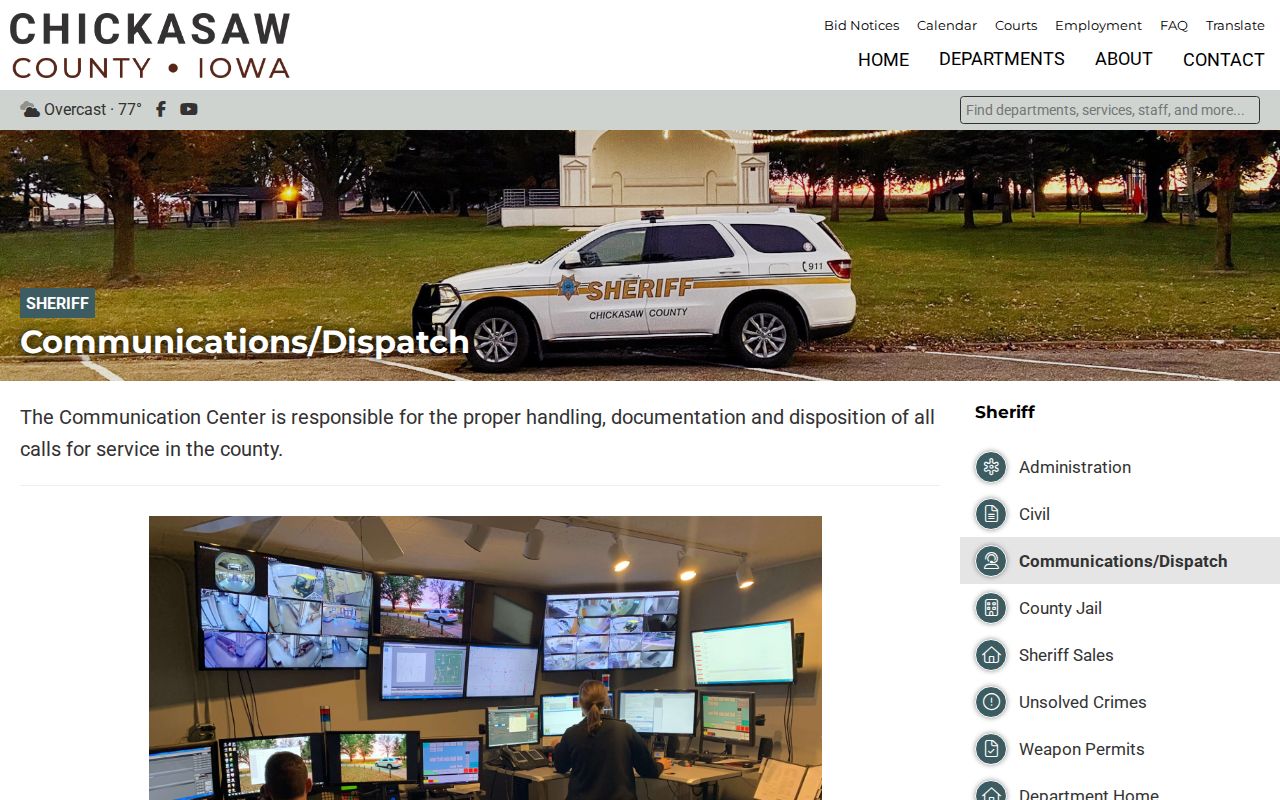
Dispatch work connects to a bigger machine. The Iowa DPS IOWA System links more than 450 law-enforcement and criminal-justice agencies, carrying wanted-person, missing-person, protective-order, stolen-property, license, and criminal-history messages. It is not a public statewide warrant search. It never exposes private names or a roster to the public. For warrant checks in Chickasaw County, the public route stays the same: Iowa Courts Online, the Clerk, records requests, and direct contact with the Sheriff.
What a Chickasaw County Warrant Record Shows
What does a warrant record actually contain? An Iowa warrant form, plus the public events on a case, identifies the legal order, though availability turns on the case stage and access law. The details can include the subject, the alleged offense, the issuing authority, the command to arrest, any bail endorsement, execution, and the return. A marker like CASE-ID-WARRANT only shows where a local case identifier sits. It is not a promised Chickasaw County numbering format.
| Case or warrant identifier | Connects the court order to the correct docket. |
|---|---|
| Subject name | Identifies the person named by the court, subject to access limits. |
| Charge or basis | States the alleged offense or missed court duty. |
| Issuing court | Names the Iowa District Court authority behind the order. |
| Bail endorsement | May state a bond direction, though later judicial discretion still applies. |
| Execution and return | Records service and return to the court. |
| Status events | May reflect issuance, service, recall, or another later action. |
A top-line case status cannot settle the warrant question in Chickasaw County. Read the full event history, then confirm the latest entries with the court and the agency.
Chickasaw County Warrant Terms
Plain definitions help you ask the Clerk a precise question. Iowa's formal wording may not match the labels on third-party pages about Chickasaw County warrants. Whenever possible, use the term in the docket or court order.
- Active
- The warrant remains in force and has not been served or withdrawn.
- Served
- Law enforcement has executed the warrant and returned it through the legal process.
- Recalled
- The court has withdrawn the warrant.
- Quashed
- A court has set aside the warrant through judicial action.
- Failure to appear
- A person did not attend a required court event; Iowa Code section 805.5 governs a citation-based warrant process.
- Probable cause
- Facts sufficient for the judicial finding required before an arrest or search warrant issues.
Payment is not one of these status terms. A receipt may settle an eligible debt in Chickasaw County. Yet a separate court order can still be required to recall a warrant tied to a missed appearance.
Who Issues and Serves Chickasaw County Warrants
Judges and magistrates of the Iowa District Court, acting under Iowa law, issue every Chickasaw County warrant. The Clerk of Court keeps the official case record and receives the returns. The Sheriff and other peace officers handle service. The County Attorney prosecutes cases but neither defends you nor replaces the Clerk as record keeper. The official Chickasaw County court page lists the court location and current Clerk contacts.
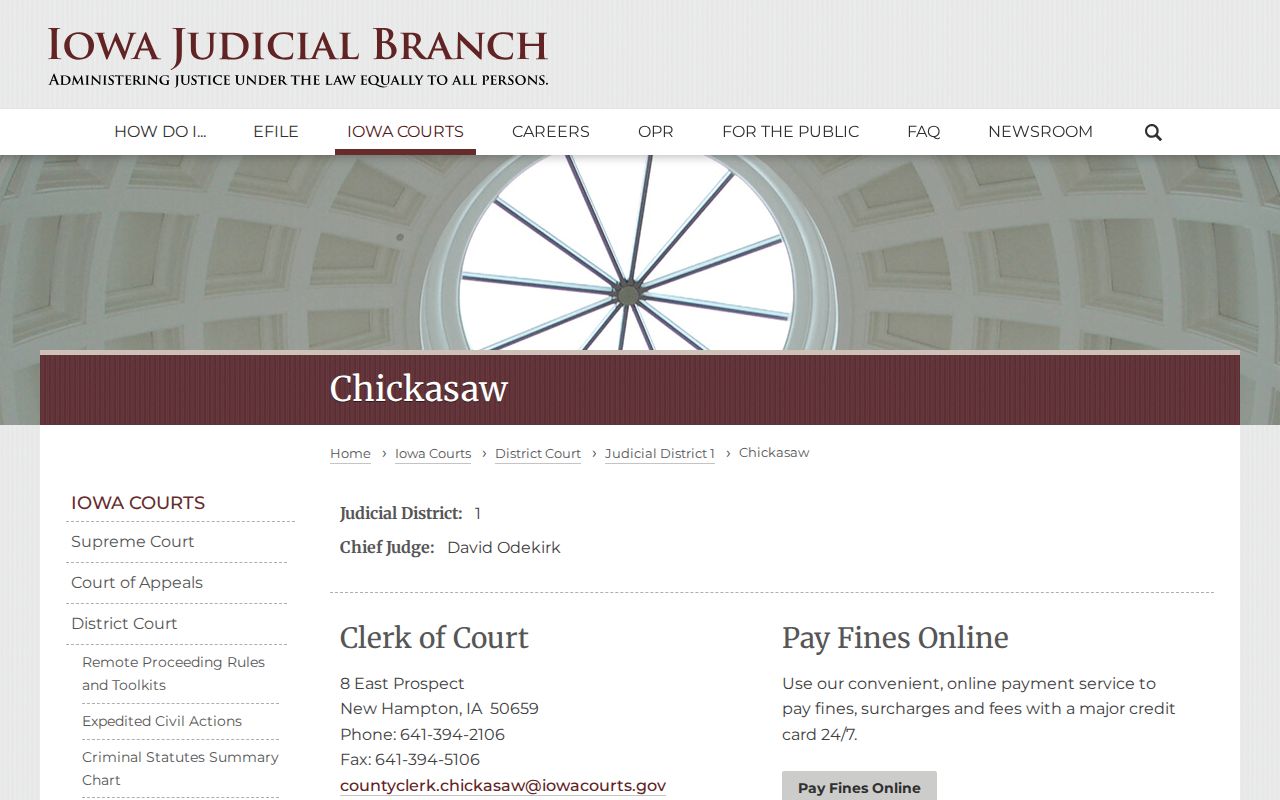
The court's site lays out the public route for docket access, ePayment, scheduling, and reaching the Clerk for Chickasaw County questions.
Chickasaw County Clerk of Court
8 East Prospect Street
New Hampton, IA 50659
641-394-2106
Chickasaw County Sheriff
116 N Chestnut Street
New Hampton, IA 50659
641-394-3121
No Chickasaw County Warrant Roster
Chickasaw County publishes no public warrant roster. The Iowa Judicial Branch does not post one either. There is no most wanted page, no roundup notice, and no amnesty window anywhere in Chickasaw County, so no reward program or update schedule exists to describe. That gap is not proof that no warrants exist. It only means nothing official is published. A blank search result never clears a name. An active warrant can be new, sealed, or sitting in an agency system. It may belong to another county, or it may have been served and simply not shown in any public index yet. A stale copy can even outlive a recall. For a real status check, call the Chickasaw County Clerk of Court or the Sheriff and ask them directly. Their word beats any commercial list. If a most wanted page ever appears, the county will host it at its own government source.
What to Do If You Have a Chickasaw County Warrant
A confirmed Chickasaw County warrant will not resolve itself. The county FAQ tells anyone who missed court to reach an attorney, the County Attorney, or the Clerk. Counsel can lay out the options and speak with the issuing court on your behalf. What happens next depends on the order and the case. It might mean a new appearance, voluntary surrender, posting bond, a payment, or a motion asking the court to recall or quash the warrant. Call the Sheriff before you show up at the office or jail. Walk-in timing rarely matches what an online record implied. Keep the case ID, your receipts, and a log of every official contact. Once the required step is done, check the later docket entry and confirm status with the agency itself.
Important: Speak with an attorney before acting on a Chickasaw County warrant, and arrange any surrender through current court and Sheriff instructions.
Chickasaw County Warrant Surrender Planning
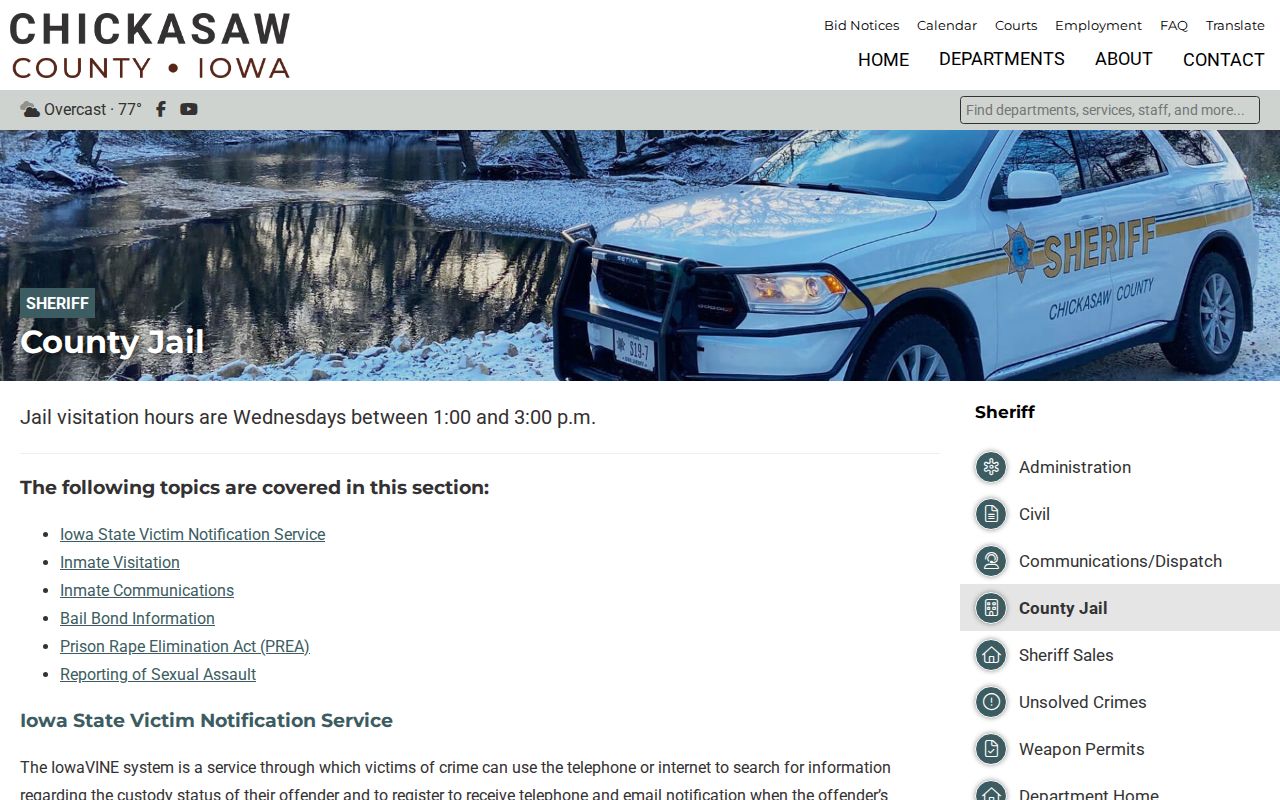
The Chickasaw County Jail page describes an eleven-bed facility and posts official jail information. That capacity tells you little about your own situation. It does not predict where someone is held, when an appearance happens, or what bond a judge sets. The warrant and current Sheriff instructions control the plan.
Iowa's Uniform Bond Schedule gives statewide guidance on bailable offenses, exceptions, and judicial discretion. A number in the schedule is not a quote for a specific Chickasaw County warrant. Ask counsel and the responsible office what the warrant actually states, whether a bail endorsement applies, and what funds or payment method is approved.
Public Access to Chickasaw County Warrant Records
Iowa Code Chapter 22 sets the state's public-record framework. Court rules and narrower statutes still control what judicial material gets released. You can inspect accessible records or ask for copies. But public status does not override confidentiality rules. Iowa Code section 804.29 restricts arrest-warrant information before its statutory release event. Iowa Code Chapter 232 protects many juvenile records. Sealed records also stay outside ordinary public access in Chickasaw County and everywhere else in the state.
Key Rules:
Iowa Code Chapter 22 provides rights and procedures for examining public records, subject to exemptions.
Iowa Code section 804.29 limits disclosure of arrest-warrant information before specified events.
Iowa Code Chapter 232 sets confidentiality boundaries for juvenile matters.
A denial or empty result does not prove that no Chickasaw County warrant exists. It may simply mark the lawful edge of public access. When a confidential status affects the person involved, an attorney can use the proper case process.
Chickasaw County Warrant Record Requests
When the ordinary docket has no accessible record, the Iowa Judicial Branch public-records page offers a route. Describe the record you want. Give the case identifier you know, and name the county. A request can seek inspection or a copy under the applicable rules; fees and timing depend on the request and on lawful access. Be clear about what a Chapter 22 request is not. It cannot cancel a Chickasaw County warrant, move a court date, lower bond, or reopen a case. Those outcomes take the proper court process before the issuing judge. A request to the Sheriff does not open NCIC or the IOWA System to the public either. Use the response to understand the record. Then take any legal relief to the issuing court, keeping access and resolution in their separate lanes.
Avoid Chickasaw County Warrant Scams
On June 9, 2026, the Iowa Judicial Branch warned about fake warrant and fine calls, texts, and letters. Scammers threaten arrest. They demand bitcoin, prepaid cards, payment through a text link, or a
Do not pay or hand over personal data because a message claims a court or deputy title. The official Sheriff page gives contact details that no scammer controls.
End the suspicious contact first. Then look up the Chickasaw County Clerk or Sheriff through an official government page, give the case ID if you have one, and ask whether the claimed matter is real. Pay court debt only through a method the Iowa Judicial Branch or Clerk confirms. A caller's private number is never a substitute for that check.
Warrant Records by City in Chickasaw County
Chickasaw County's five largest incorporated cities, per the 2020 Census, are New Hampton, Nashua, Fredericksburg, Lawler, and Alta Vista. Local police can still write citations. They can make arrests too. But the county runs no separate municipal court system, so every city case lands in the unified Iowa District Court. The Chickasaw County Clerk holds the case record, and the Sheriff's Office backs county dispatch and serves any warrant the court issues.
New Hampton Warrant Records
Population 3,494 · City police and county dispatch route cases to the district court.
Nashua Warrant Records
Population 1,551 · Police contact is local; court status comes from the county Clerk.
Fredericksburg Warrant Records
Population 987 · City code and citations do not create a separate warrant portal.
Lawler Warrant Records
Population 406 · City Hall routes local questions; warrants use county court channels.
Alta Vista Warrant Records
Population 227 · City contact and county patrol serve different record roles.
Work each city route from its source: the citation or case first. Then check Iowa Courts Online, the Chickasaw County Clerk, and a Sheriff confirmation. City hall cannot recall a district-court warrant.