
Active Warrants in Chickasaw County
Active and outstanding are status words, not warrant types. They describe court process that no one has yet served, recalled, or quashed. In Chickasaw County, judges and magistrates of the Iowa District Court issue that process, the Clerk keeps the court record, and the Sheriff's Office and other peace officers handle service and custody. The Chickasaw County Sheriff website posts no public active-warrant list, and neither does the county site, the court index, or the official city pages. The Sheriff's Unsolved Crimes page is not a warrant roster either. That gap changes the lookup route, but it does not mean Chickasaw County lacks warrant records.
Chickasaw Active-Warrant Status Terms
A public Chickasaw County docket speaks in event words, and those words may not match the status law enforcement holds right now. Read every entry in context. Ask which office can actually confirm it, because a case can show a warrant issued yet miss a very recent return or recall.
- Active or outstanding
- Not confirmed as served, recalled, quashed, or disposed.
- Served or executed
- A peace officer carried out the warrant.
- Returned
- An officer reported execution or nonexecution to court.
- Recalled
- The court withdrew the process. Confirm both records updated.
- Quashed
- The court set the process aside. Payment is not a synonym.
How the Chickasaw County Active Warrant List Works
This common search phrase points to a list Chickasaw County does not publish. There are no official search fields, roster columns, downloads, or update schedules. The practical lead is Iowa Courts Online, which opens the public case and docket record. Search your own legal name, open the matching Case ID, and scan the events for words like warrant, failure to appear, return, recall, quash, or a new hearing. Remember, the court index is not a warrant database. Some records stay sealed or confidential, recent events can lag, and a public docket never proves what an agency sees. Follow the lead with the Clerk at 641-394-2106 and the Sheriff at 641-394-3121.
Note: No refresh schedule exists, and no online result proves Chickasaw County has no active warrant.
Chickasaw Warrants Behind NCIC Access
Dispatch staff in Chickasaw County enter arrest warrants into NCIC, a system closed to the public. Iowa's partner network is the IOWA System, short for Iowa On-line Warrants and Articles, and it too serves only criminal-justice agencies. The Iowa DPS system description shows why a public court check and an agency check answer different questions.
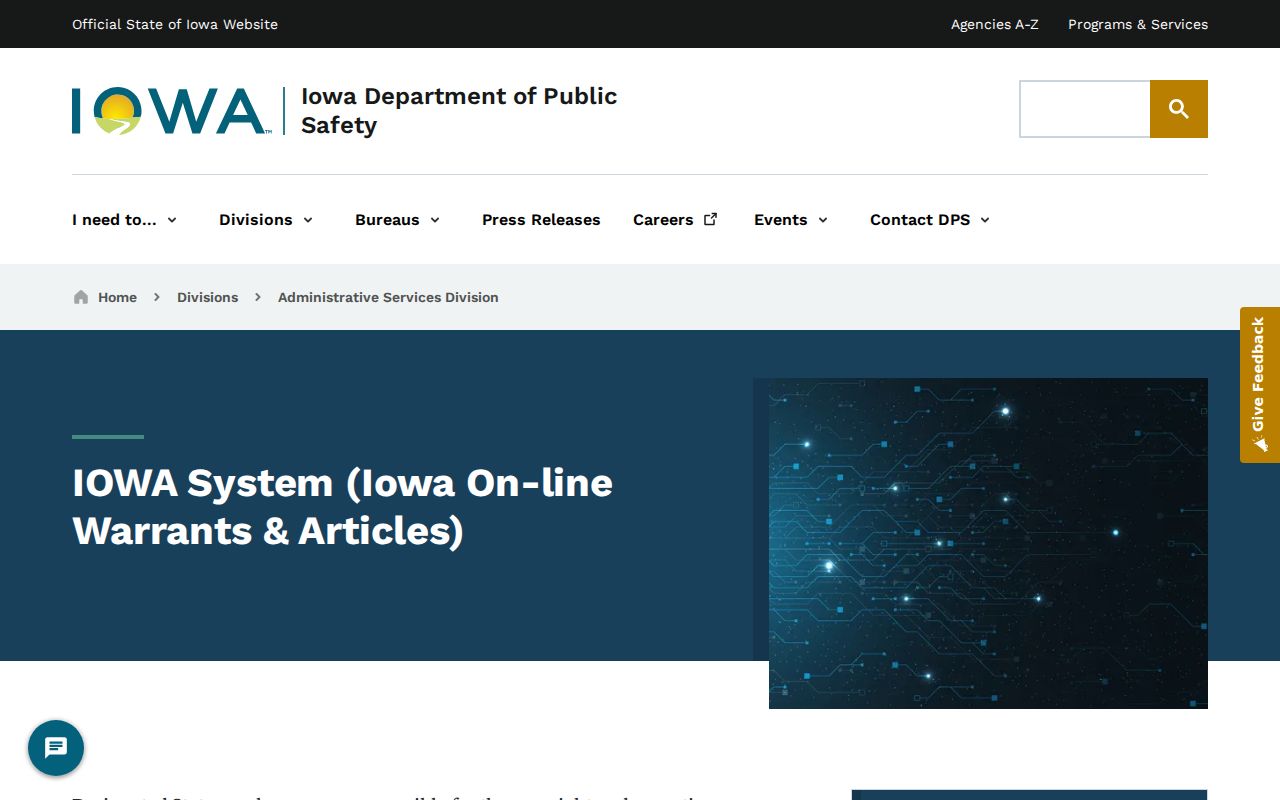
That DPS page describes an agency network, not a public warrant screen. For a real answer in Chickasaw County, call the Sheriff directly.
What a Chickasaw Active Warrant Shows
A public record often shows only part of a warrant. Iowa Code section 804.29 can keep warrant, citation, and affidavit details confidential until specified events occur. Juvenile and sealed matters carry added limits. When fields are open, the case identifier and issuing court are the best keys for a Chickasaw County Clerk call.
| Case or Warrant Number | Connects the question to the right county file. |
|---|---|
| Legal Basis | Complaint, citation, indictment, information, FTA, or sentencing absence. |
| Issuing Court | Iowa District Court, Chickasaw County. |
| Offense and Date | Public description, Code provision, and issue date. |
| Bond or Conditions | Endorsed terms, subject to current confirmation. |
| Return and Status | Service, return, recall, quash, or another event. |
Never assume an older label still holds. Ask the Chickasaw County Clerk what the docket says now, and the Sheriff what staff can confirm.
Confirm Chickasaw Warrants Without a Roster
With no roster, use a short chain that checks both systems. Start at Iowa Courts Online and search your own legal name. Iowa's help calls for at least two last-name letters. Open the right Case ID, note the case type and warrant events, and write down the case or citation number before you call.
- Call the Clerk at 641-394-2106 for the docket, next date, and required filing or appearance.
- Call the Sheriff at 641-394-3121 for NCIC, custody, and safe-surrender routing about your own status.
- For a missed date, contact counsel. An unrepresented person may use the county FAQ’s Clerk and County Attorney routes.
- Ask for an order, entry, receipt, written instruction, or new appearance date.
A Chapter 22 request can seek releasable agency material in Chickasaw County. It cannot recall a warrant or stop service.
Chickasaw Most-Wanted Lists and Warrant Roundups
Chickasaw County runs no most-wanted program, reward policy, warrant roundup, amnesty week, or walk-in warrant docket. No official roster of that kind exists. The Sheriff's Unsolved Crimes page is not a wanted list, and nothing here should pretend otherwise.
Key Point: The official Sheriff page published no most-wanted or active-warrant roster when reviewed.
Use it for future notices, and confirm personal status with the court and Sheriff.
Even a curated most-wanted list would not equal a full agency database. It would spotlight a chosen few, while the system the Chickasaw County Sheriff uses holds far more entries.
Chickasaw Court and Agency Records Differ
A warrant starts as court process, moves through the Clerk, and may enter agency systems. After service, an officer returns process to the court. A later recall is also a court act, and it may take time to reach the agency side. Each handoff can leave a short gap. That matters across Chickasaw County's 504 square miles, where the Sheriff patrols the communities and runs the jail. City police can cite or arrest, but the county has no separate municipal or justice court, so city cases route through the unified Iowa District Court.
Chickasaw Warrant Bond Is Case-Specific
A bond amount on a warrant is no promise the same terms apply at surrender. Iowa's schedule covers specified arrests when courts are closed, listing amounts for non-forcible felony and misdemeanor classes, while forcible felonies and named offense groups require judicial review. Section 804.3 permits endorsed bail or other conditions when an offense is bailable. The Iowa bond schedule spells out those limits.
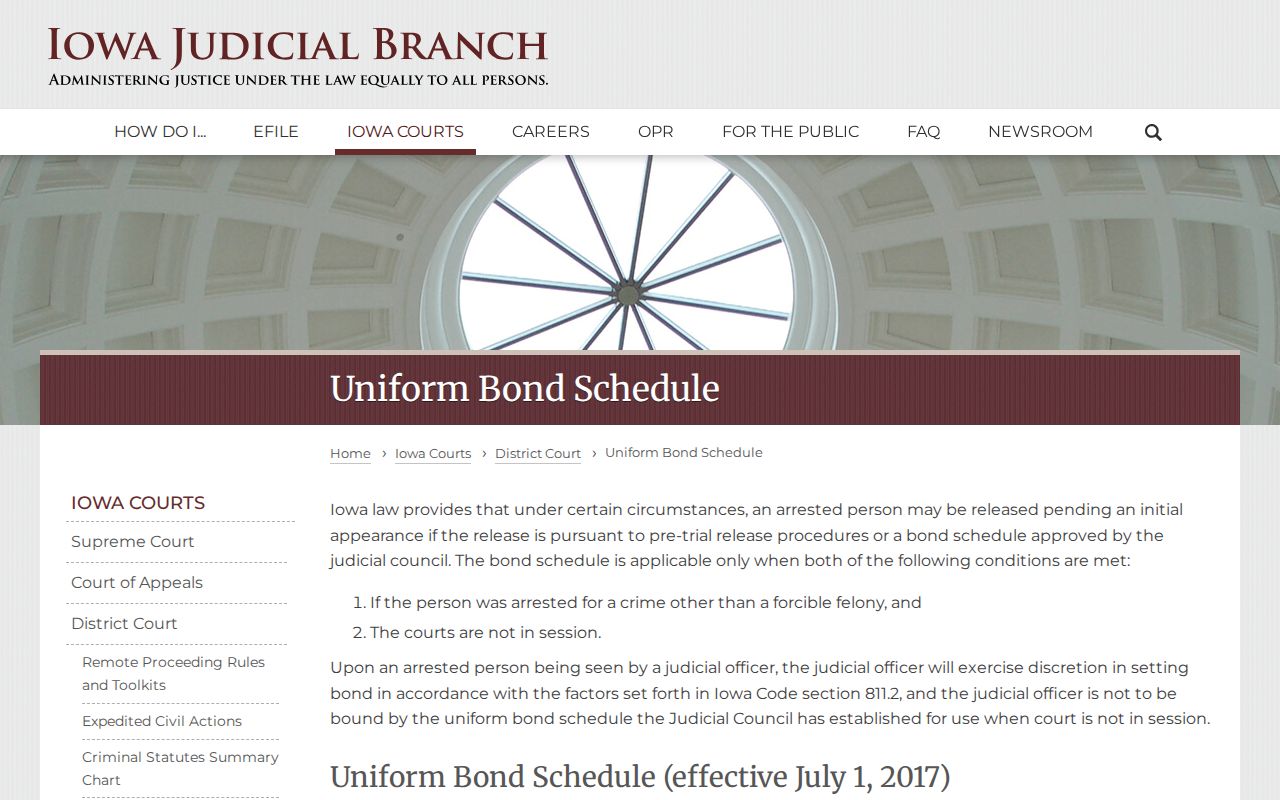
Ask the Chickasaw County Clerk or your counsel whether the warrant is bondable, and call the jail about intake. Bond secures appearance only. It does not dismiss the case, recall the warrant, or pay court debt.
If Your Name Is on the Chickasaw Warrant List
Say a site claims your name appears on a Chickasaw County warrant list. There is no official list to check it against. So treat the claim as a reason to call the Clerk of Court or the Sheriff directly. Watch for scams along the way. Iowa's 2026 scam warning is blunt: courts never demand money or Social Security numbers by phone or text. Anyone who says a card, cryptocurrency, or a payment link will stop your arrest is lying to you. If a warrant is confirmed, a lawyer can walk you through a scheduled appearance, surrender, bond, a reset, or a motion to recall or quash it. Call before walking in, get the outcome in writing, and recheck both offices afterward.
Important: Confirm with the Clerk and Sheriff, consult counsel, and call before surrender because bond and court steps vary by case.
See the county warrant records overview for the broader resolution sequence.
Chickasaw Warrant Confirmation Records
A warrant check is only finished when you hold proof. Ask the Clerk for whatever paper fits the case: the docket entry, a recall or quash order, an appearance notice, or written direction from the court. Keep the bond receipt if one applies. Save every release condition too. Then ask the Sheriff's office whether its record yet reflects what the court did. Updates do not always land together. A court order and an NCIC entry can post at different moments. For Chickasaw County questions, the Clerk publishes countyclerk.chickasaw@iowacourts.gov and the Sheriff publishes ccso@chickasawcounty.iowa.gov. Email works for routing routine record requests, but call first before any surrender. Write down the date, the office, and the instruction you were given rather than trusting memory. The same care goes for public-record requests. Iowa Code Chapter 22 lets you ask for releasable records, though exemptions and copying or staff costs may apply. A request does not freeze enforcement, create a court appearance, or change active status. Use it to get records, not as a resolution motion.
Avoid Fake Chickasaw Warrant Demands
A call that plays on the fear of an active warrant can sound urgent and still be fake. Iowa's Judicial Branch warned on June 9, 2026 about calls, texts, and letters claiming missed jury service, contempt, arrest warrants, or unpaid fines. The warning says the Branch never sends official court messages by phone or text to demand money or a Social Security number. Law enforcement does not collect court fines either. Hang up when a caller wants a prepaid card, cryptocurrency, a payment link, or a transfer to avoid arrest. Never dial the callback number in the message. Find the live Chickasaw County court or Sheriff contact on an official government page instead. The Clerk can confirm the public court case. The Sheriff can explain whether staff can confirm an agency entry. Eligible court debt goes to the Clerk, through official Iowa ePayment, or through the state's published phone-payment route. Even then, a receipt does not prove warrant recall. Ask the Clerk whether the payment satisfies the underlying duty or whether a judge must issue a separate order. Keep the receipt, record the case ID, and get the next required appearance or a written status. That chain protects you from a scam and from an unresolved court step at once.